
Phone:
+86-13450578802


Views: 0 Author: Site Editor Publish Time: 2026-11-29 Origin: Site


A low-ambient capacity figure is a promise made at one set of temperatures, not a fixed property of the unit. Judge it by asking for heating output declared at your project's outdoor design temperature and at the water temperatures your duty needs, with the test procedure, its edition and the verification basis stated — then compare that figure with the load you calculated at the same condition.
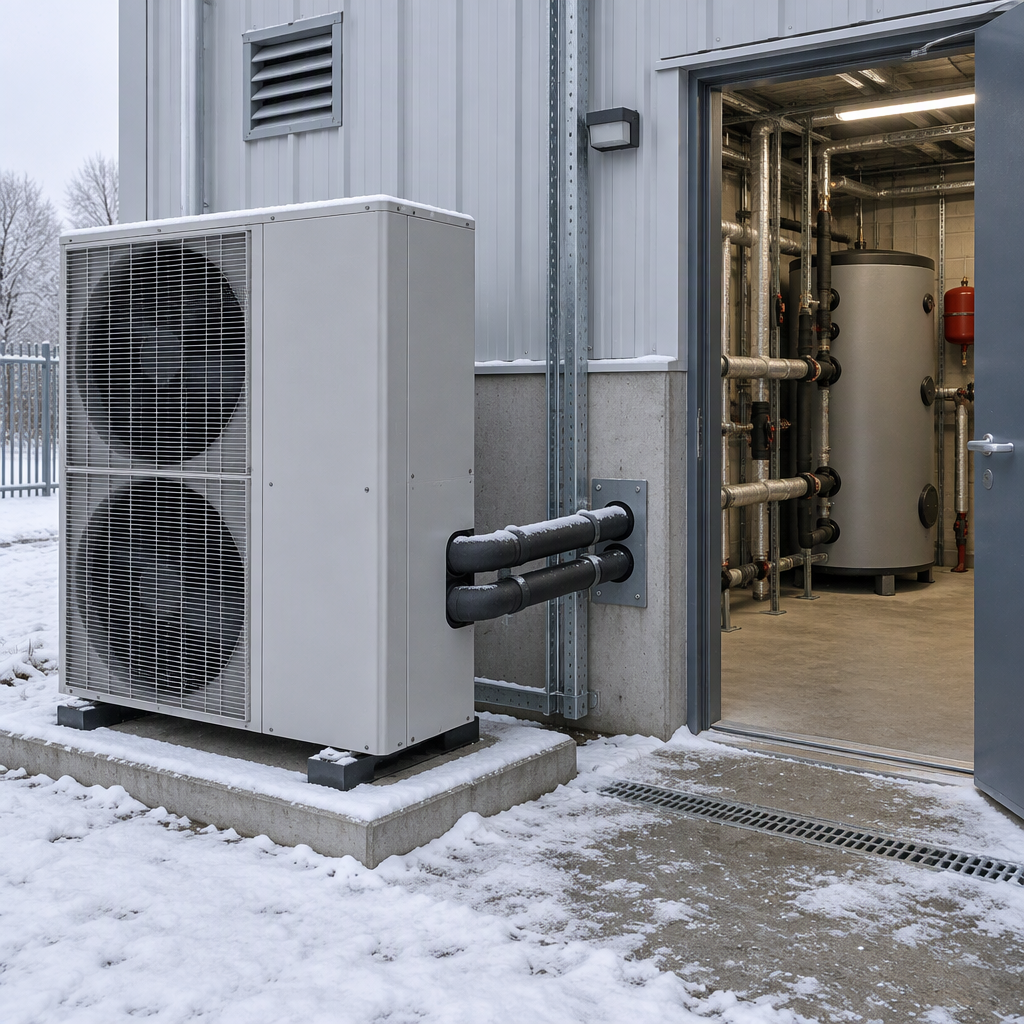
Heating capacity is the heat output a unit delivers at a defined outdoor air temperature and defined water temperatures, measured under a named test procedure. That is why the cold-climate air-source heat pump specification states its purpose as giving engineers and contractors assurance of the required heating capacity at the design temperature, without unnecessary oversizing.
The specification was written because the seasonal heating metric then in use held no test points below 17 °F and assumed steady-state operation with electric resistance elements — exactly the detail a cold-weather project depends on. The practical consequence is comparability: a capacity number is usable only when the outdoor temperature, the water temperatures and the test procedure are stated beside it, so any figure quoted without them should be restated before it reaches a comparison sheet.
A heat pump does not create heat; it moves heat from a cooler place to a warmer one and must add work to the refrigeration cycle to do so. Because the delivered heat depends on the two temperature levels the cycle works between, the output available on your coldest design day is a different number from the output on a mild day.
The IEA Heat Pumping Technologies programme sets out the principle: heat is taken from air, ground or water and lifted to a higher temperature level with added work, which is why a heat pump can return several units of heat for each unit of electricity and why its output is tied to the temperatures it works between.
That temperature dependence is the reason cold-climate specifications exist. The ccASHP specification's stated rationale is that the seasonal metric then in use contained no low-temperature test points below 17 °F, so a mild-weather headline can describe a unit in conditions that say very little about a cold design day.
Ask every candidate supplier for one comparable data set: heating output at your site's outdoor design temperature with the matching water temperatures, the test procedure and edition behind the figure, the verification basis, and the application the rating covers. A quotation that omits any of those cannot be compared with another unit or checked against your load.
| Data to request | What it must state | Why it decides the comparison |
|---|---|---|
| Design-condition capacity | Output at your outdoor design temperature, with the leaving and returning water temperatures | This is the figure that has to meet your calculated load, and it is the figure cold-climate specifications are written around |
| Test procedure and edition | The standard used, its edition, and the test points included | Figures produced by different procedures or editions are not directly comparable, because the test points differ |
| Steady-state or modulating | Whether the declared figure assumes steady-state operation or allows the unit to modulate | The specification treats modulation as part of how a unit actually performs, so the assumption behind the figure matters |
| Verification basis | Third-party verified test data, or a manufacturer declaration | Third-party verification ties the figure to specified low-temperature test points; a declaration does not |
| Scope of the rating | Whether the data covers space heating, hot water production, or both | A space-conditioning rating and a hot-water rating answer different questions, so a figure cannot be carried from one duty to the other |
| Behaviour below the tested point | Whether operation continues below the tested temperature, and what supplementary heat the proposal assumes | It keeps the fallback explicit instead of leaving it to be discovered on site |
The ccASHP specification and product list (Version 4.0, effective 1 January 2023) is a useful reference for the fields above. It states its scope as IECC climate zone 4 and higher, explains the low-temperature test-point gap it was written to address, and covers space-conditioning listing categories — central heat pumps, VRF multi-split, packaged terminal and single-package vertical units — rather than hot water production.
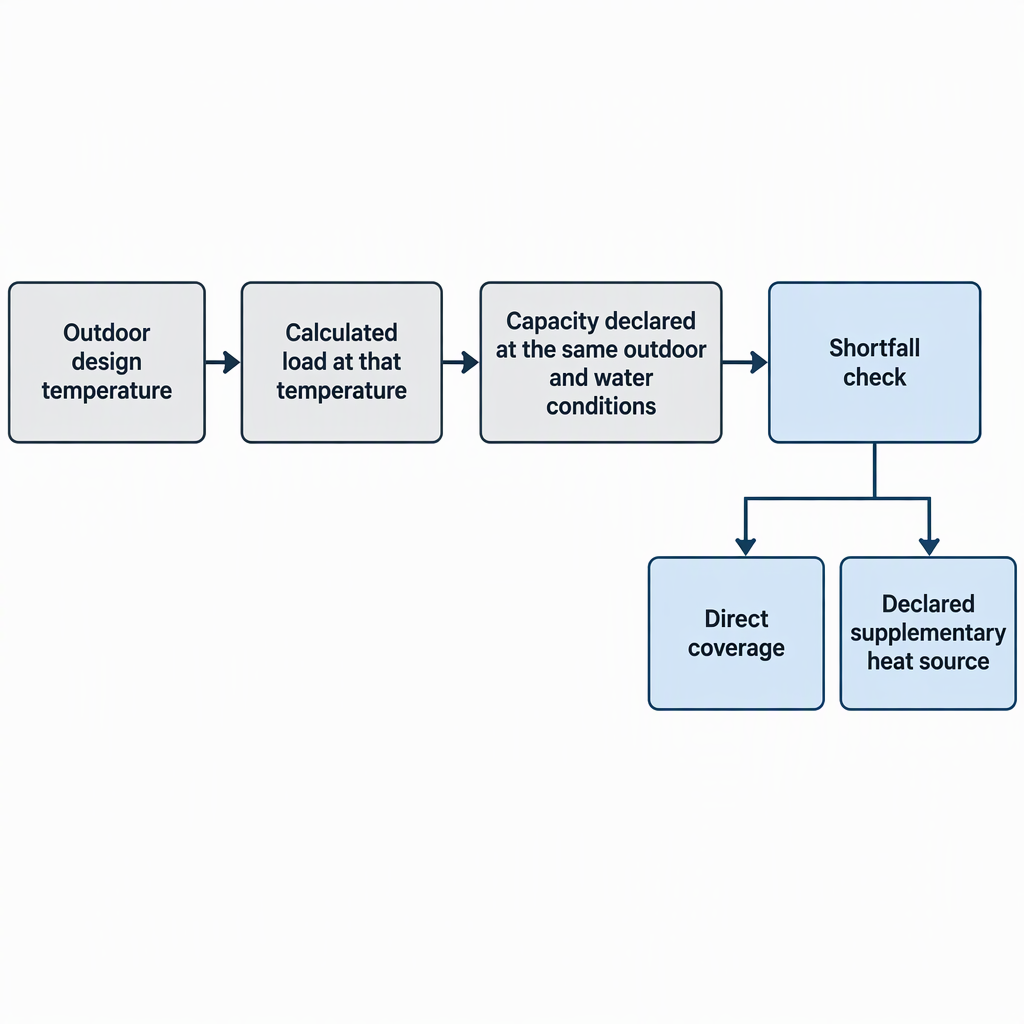
Work in a fixed order: establish the site's outdoor design temperature and the water temperatures your duty needs, calculate the load at that condition, then compare it with capacity declared at those same two conditions. Reversing the order — matching a load taken at a mild temperature to a capacity taken at a warm one — is the most common way a cold-weather shortfall is missed.
A space-heating capacity rating does not describe hot water production. Hot water asks the cycle to lift heat to a different delivery temperature, so the duty needs its own capacity declaration at its own water temperatures — and the cold-climate specification above covers space-conditioning categories, not hot-water ratings.
Space heating
Hot water production
For CO2 (R744) equipment the available range tends to be broad rather than single-purpose: Foshan LYD Energy Saving Technology Co., Ltd. lists air-source CO2, water-source CO2, air-to-air and high-temperature heat pumps, together with customized configurations. A product category is still not a capacity declaration, so whichever range a supplier offers, the deciding figure is the one stated at your outdoor and water temperatures.
Before a low-ambient capacity claim enters a quotation or a design, confirm the conditions attached to the figure, the procedure and edition behind it, who verified it, the test points covered, the duty it applies to, and what the system does below the tested point.
Treat a capacity shortfall at the design outdoor temperature as a system design decision rather than a product verdict. If verified capacity no longer covers the calculated load at that condition, plan a supplementary heat source into the scheme instead of assuming the heat pump will hold the duty on its own.
Operating below a tested temperature is not the same as delivering rated output below it. ENERGY STAR's air-source heat pump guidance notes that certified cold-climate units continue to work below 5 °F, while also advising that pairing them with a backup energy source heats a home most efficiently at lower temperatures. That guidance is written for the US residential market, so treat it as an example of how a low-temperature limit is reported, not as a requirement for a commercial or industrial project.
Write the enquiry as a data request rather than a request for a model: state the site, the duty and the two design temperatures, ask for capacity at those conditions, and ask for the procedure, edition and verification documents behind the figure. Answers written to a fixed set of fields can be compared with each other by procurement and engineering teams; brochure figures cannot.
The defensible way to judge heat pump low ambient performance is a match at one condition: heating output declared at your outdoor design temperature and water temperatures, produced by a named procedure and edition, measured against the load you calculated for that same condition. Anything short of that compares unrelated conditions rather than performance.
Most disputes over a low-ambient capacity figure come down to four things: the conditions it was measured at, the procedure and edition behind it, who verified it, and what the system does below the tested point.
The claim should name the procedure and its edition, together with the test points included. The ccASHP specification (Version 4.0, effective 1 January 2023) names the test standard and edition that apply to each product category it lists, and its own rationale is that the seasonal metric then in use contained no low-temperature test points below 17 °F. Ask your supplier for the same level of detail, and confirm the current edition with the organisation that publishes the standard.
It covers the test points of one programme, not capacity at every temperature. ENERGY STAR states that its certification requires third-party verified performance at low temperatures, with testing down to 5 °F. When a supplier claims third-party verification, ask for the programme, the test report and the temperatures covered, then check whether those temperatures include your design condition.
No. ENERGY STAR notes that certified cold-climate units continue to operate below 5 °F, while also advising that pairing them with a backup energy source heats a home most efficiently at lower temperatures. Operating and delivering rated capacity are separate statements, so ask for the output available at your design temperature rather than assuming the tested figure extends downwards unchanged.
Sizing should follow the calculated load. The ccASHP specification names assurance of the required heating capacity at the design temperature without unnecessary oversizing as one of its purposes, and ENERGY STAR advises verifying size with a room-by-room load calculation. Where verified capacity at the design condition is unavailable, a unit with a declared supplementary heat source is a more defensible answer than an arbitrary step up in size.
Capacity first, because it answers a pass-or-fail question: whether the load is met at the design condition. Efficiency then answers the running-cost question, and it is tied to the same temperatures — a heat pump returns several units of heat per unit of electricity, but the quoted value applies to the conditions it was measured at. Compare both figures only between units rated at identical conditions.
The specification is scoped to IECC climate zone 4 and higher and is a model programme requirement used by efficiency programmes and product listings, not a national or international code. Its method travels well — it asks for capacity at design temperature from low-temperature test points — but the requirements that bind your site come from your own jurisdiction and project specification, so confirm them with the local authority and your design team.
